
The Silent Power Leak: Why Your Core Matters More Than You Think
Your Core is the Power Link - Not Just Your Abs
When most people hear “core,” they think abs…crunches…maybe a plank or two.
But in golf?
Your core is so much more than that.
It’s the bridge between your lower body and upper body…and it plays a massive role in how efficiently your swing transfers energy.
A strong, connected core:
Generates rotational force
Keeps your posture solid
Stabilizes your finish
Protects your back and shoulders from doing too much
When your core isn’t doing its job…
That’s when things start to break down.
Your timing gets off…your swing sequence falls apart…
and power quietly “leaks” instead of transferring cleanly to the ball.
Signs Your Core is Letting You Down
I see this all the time with golfers…
✅ You’re losing distance even though you’re practicing
✅ You struggle to stay balanced in your swing
✅ You feel tension in your back or shoulders
✅ You’re tight or fatigued after 18 holes
✅ Your swing feels inconsistent from day to day
If this sounds familiar…
It’s not just your swing.
It’s your body not stabilizing the way it should.
3 Core Exercises Every Golfer Over 50 Should Be Doing
Let’s get one thing straight…
👉 This is NOT about doing more crunches.
If you want real, functional core strength for golf, you need to train your body the way it actually moves in your swing.
READ THIS CAREFULLY:
Most people overlook the pelvic tilt.
And before you roll your eyes…stay with me.
This is one of the MOST important movements your body needs to learn.
Not just for golf…for your back, your posture, your longevity.
👉 This is a move to MASTER.
And once you think you’ve mastered it…keep practicing it.
Every. Single. Day.
Because here’s why…
If you can’t control your pelvis:
your low back takes over
pain starts to show up
and your impact position suffers
When you get into impact, you should naturally be in a pelvic tilt.
The more you train it…the more it shows up in your swing.
WORKOUT NOTE: Before each rep, do an arch and tuck. Reset your body in between reps.
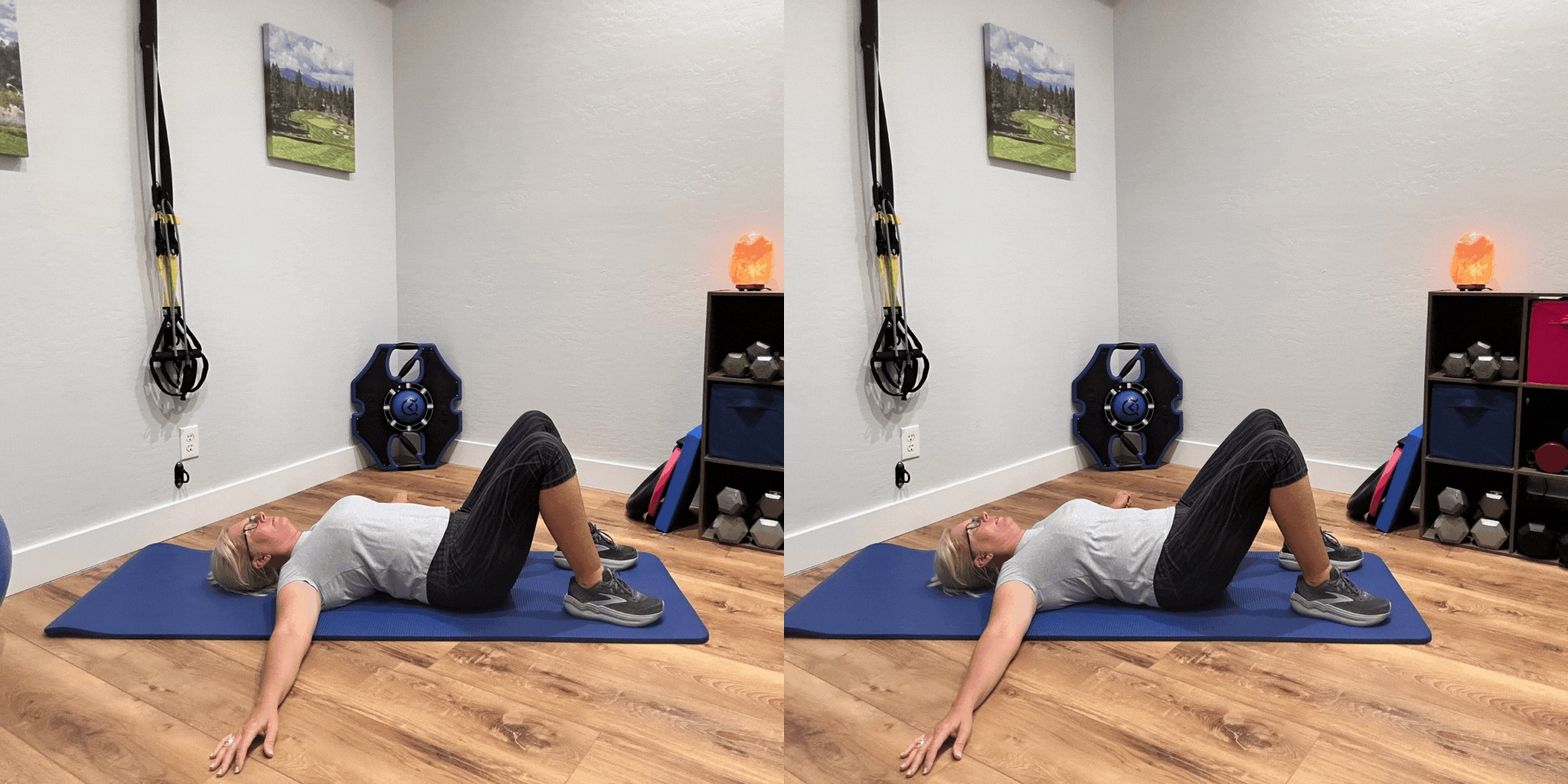
How To Pelvic Tilt (Arch/Tuck) - Floor:
First lay on the mat so you can get a true feel for a pelvic tilt.
Feet flat, knees bent. Keep glutes on the floor the entire time.
Arch your low-back. You should be able to slide your hands under your back.
Now, keeping your hips ON THE FLOOR, press your low-back to the floor. You shouldn't be able to slide your hand under your low-back.
TIP: Squeeze glutes as you are pressing your low-back into the floor.
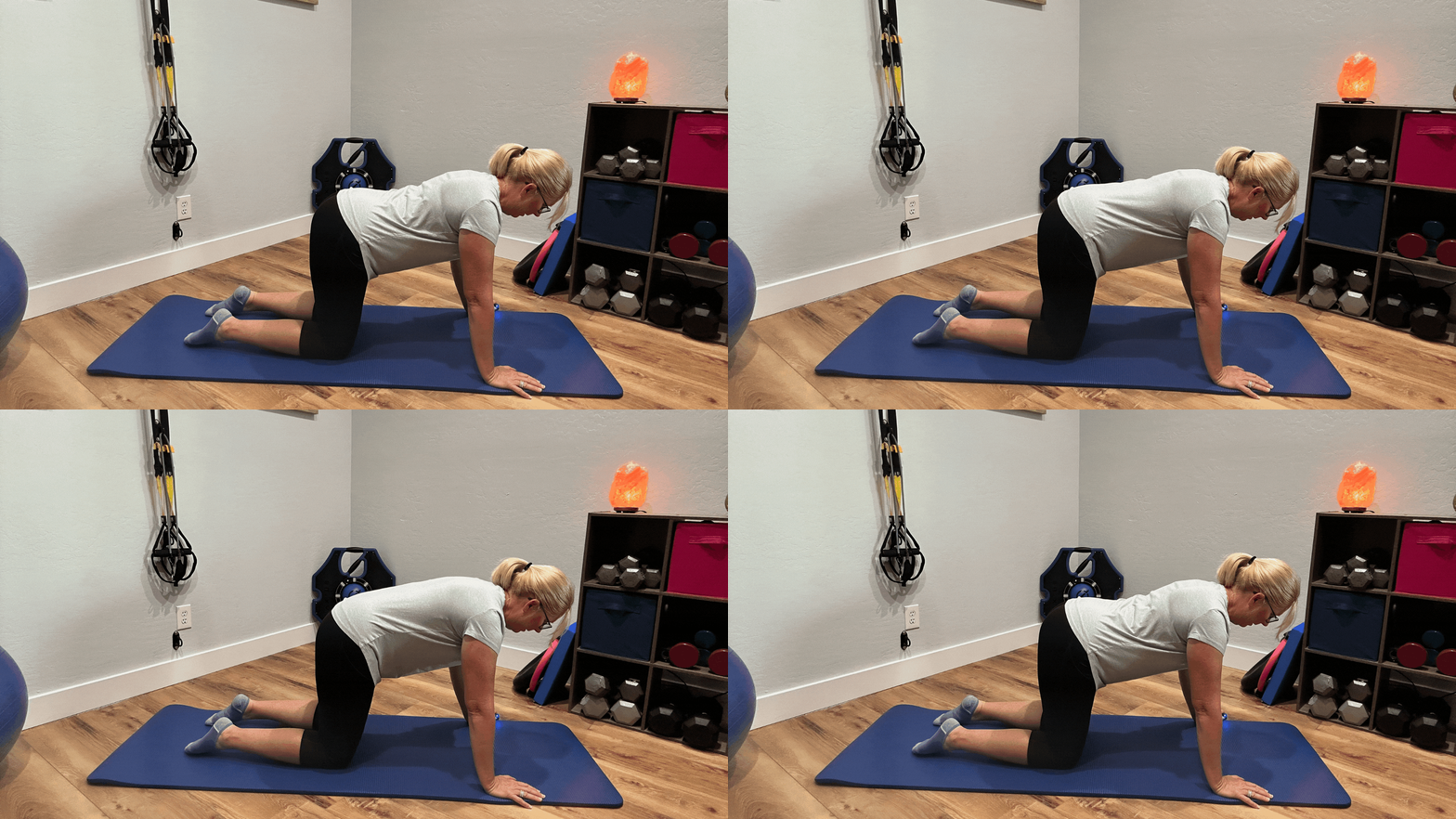
How To Pelvic Tilt (Arch/Tuck) - Quadruped Position (Prime Position)
Get on your hands and knees. Keep shoulders over your wrists, hips over your knees.
The movement is in your pelvic area, not your upper back.
Start with the arch in your low-back and then flatten your low-back.
Squeeze your glutes with each rep as you flatten your back.
5-8 reps each; 2 sets
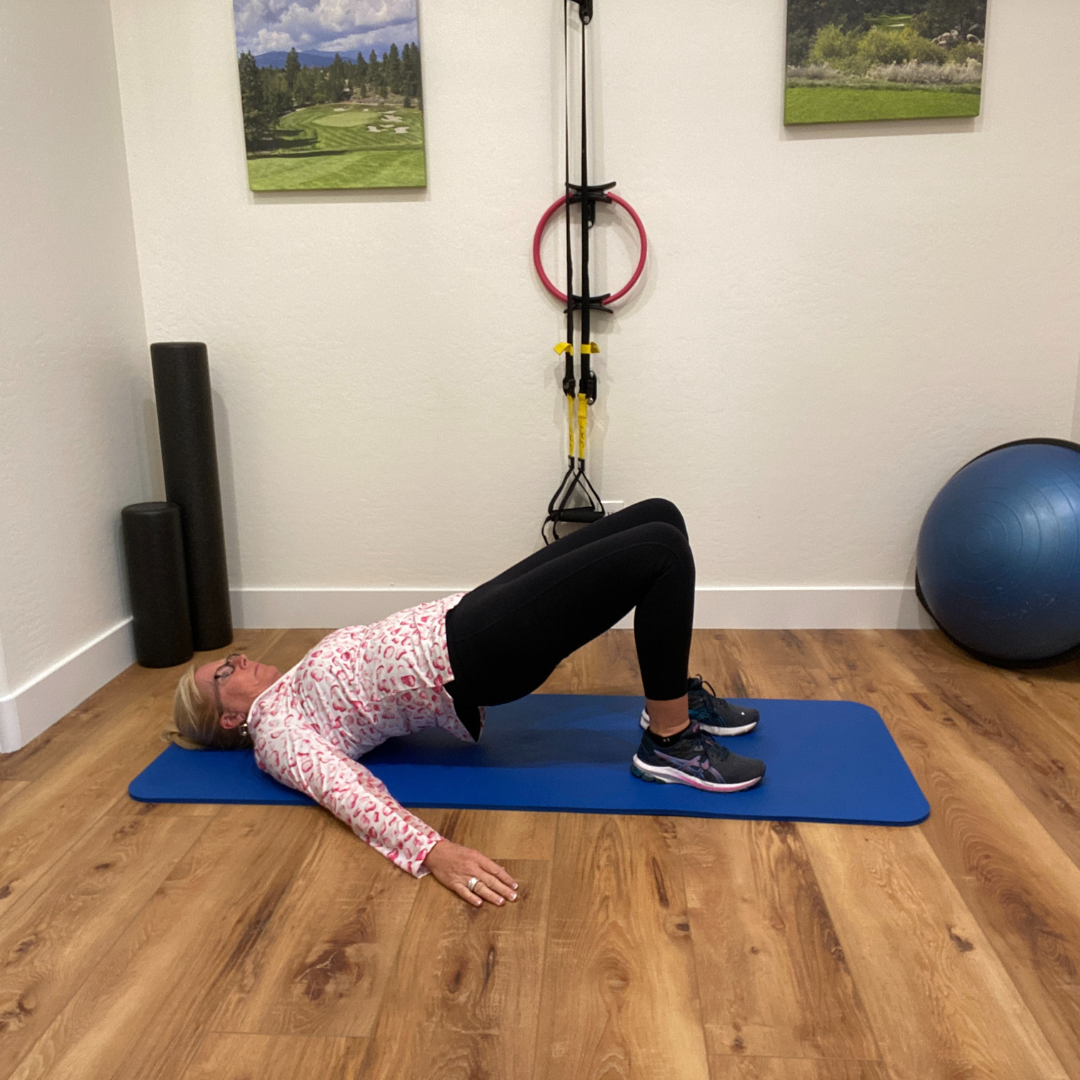
Glute Bridge
Why it works:
Your glutes are part of your core system. Strong glutes support your hips and spine and help power your rotation. This move also reduces lower back compensation.
How to do it:
Lie on your back, knees bent, feet flat
Arch and Tuck, squeezing your glutes and lift your hips until your body forms a straight line.
Hold for 2 seconds at the top, then lower with control
Come down 1 vertebrae at a time. Think of your spine as a string of pearls. Lower down 1 pearl at a time.
Arch and Tuck between every rep. Squeeze your glutes!
Repeat for 10–15 reps
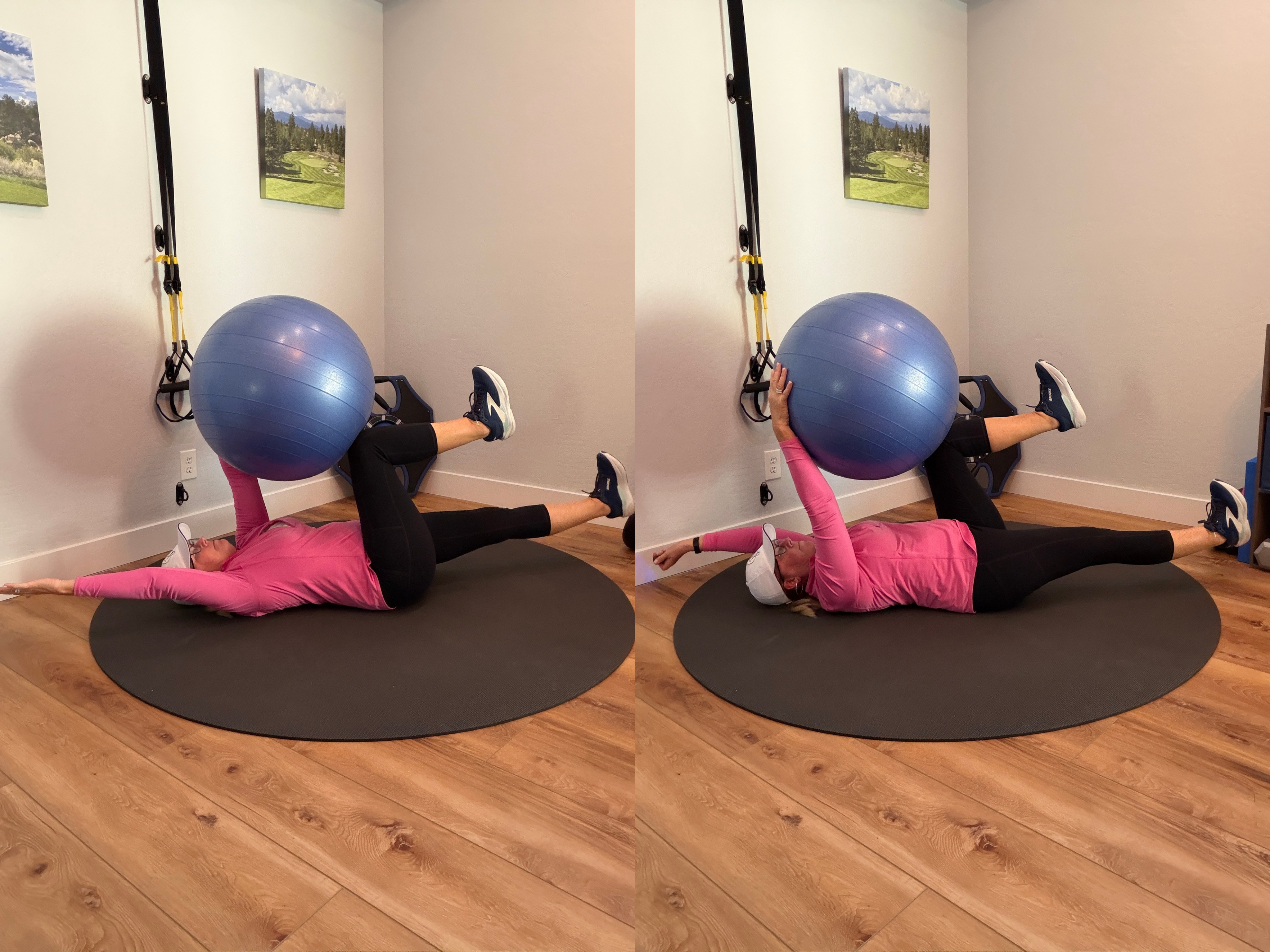
Modified Dead Bug
Why it works:
This exercise builds anti-rotational core strength, meaning your body learns to resist unwanted movement keeping you stable throughout your swing.
How to do it:
Lie on your back with knees bent and feet on the floor. Place stability ball on knees and support with hands.
Extend one arm overhead and flex your foot and bring the opposite heel forward. Use your non-moving knee and non-moving hand to stabilize ball.
Keep arm straight as you go overhead, keep back FLAT ON FLOOR, squeeze glute as you extend your leg. Engage your abs.
Make sure to have your knee straight as you extend and same with your arm. Keep it straight. Push through your heels as you extend your foot out.
Return to start, then switch sides
Keep your lower back pressed gently into the floor
Perform 5-8 reps per side
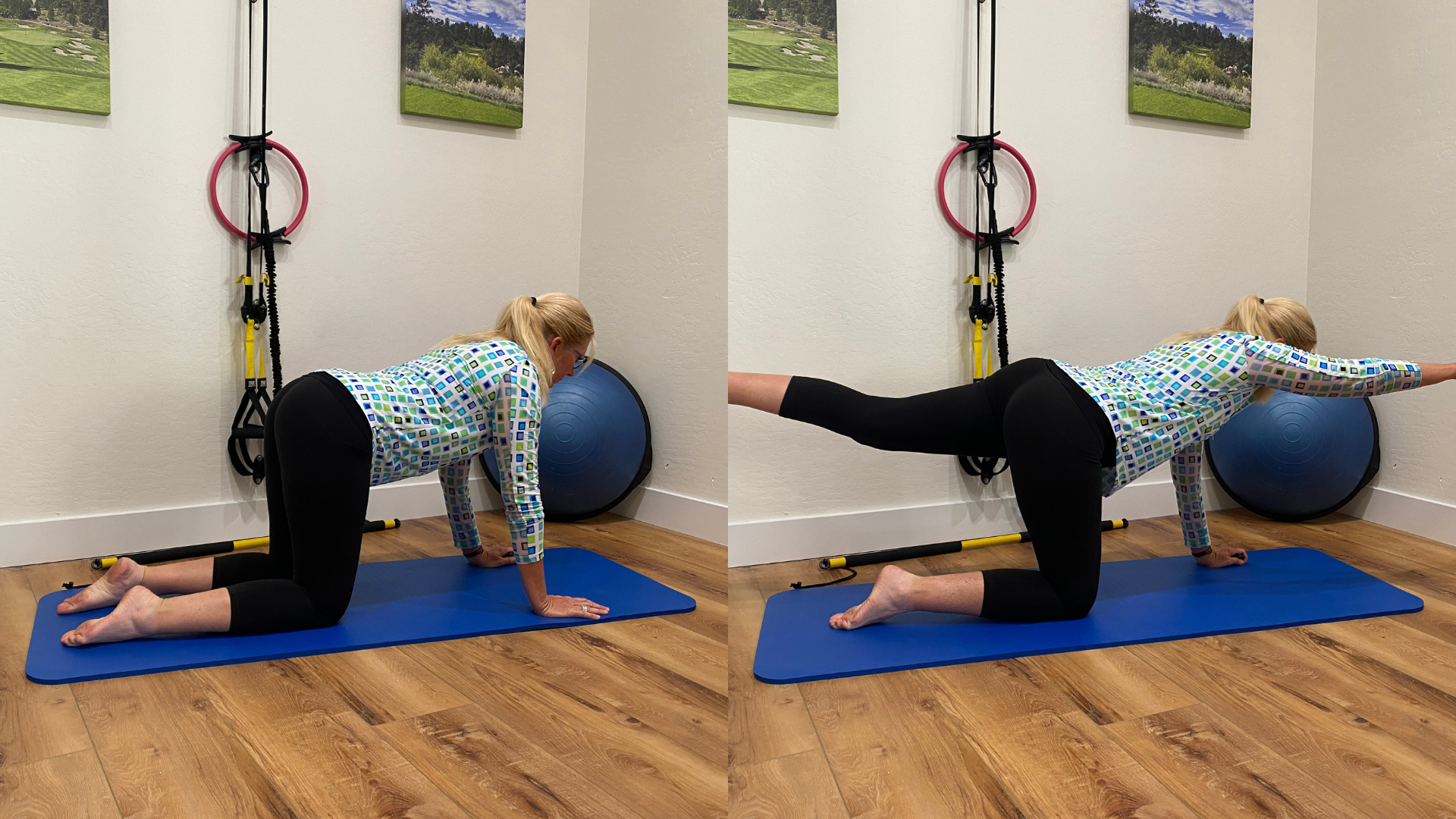
Bird Dogs
Why it works:
Bird dogs improve core control, balance, and spinal alignment — all essential for staying grounded and consistent in your swing.
How to do it:
Start in a tabletop position on hands and knees
Extend opposite arm and leg at the same time
As you extend your leg - squeeze your glutes, keep back flat (do an arch/tuck before each movement). Keep your toes pointing down to the floor.
Extend your arms all the way out.
Draw your abs inward.
Hold for 3–5 seconds, keeping hips square
Return to start and repeat on the other side
Perform 6–8 reps per side
These Are the Moves That Keep You Playing Strong
You don’t need:
a fancy gym
a complicated program
or 2-hour workouts
You need the right movements…
The ones that:
support your body
rebuild your foundation
and give your swing structure
When your core is working the way it should…
You don’t just feel stronger.
You feel:
more connected
more balanced
more confident
From the first tee…to the last putt.
Ready to Regain Your Distance and Consistency?
If you’ve been feeling like something is “off” in your swing…
Or like you’re working harder than you should for your distance…
There’s a good chance your body - not your swing - is the issue.
And that’s exactly what we figure out.
👉 Start with Fit for the Fairway
This is where you build the foundation:
mobility
core strength
stability
consistency
So your swing feels more connected and consistent
👉 Want a more personalized plan?
Schedule a Golf Performance Strategy Call
We’ll look at:
how your body moves
where you’re losing power
what’s causing inconsistency
…and give you a clear plan to fix it.
FAQ: Core Strength and Golf Performance
Does core strength help increase golf distance?
Yes…your core is what transfers energy from your lower body to your upper body. Without it, you lose power before you even get to impact.
Is core strength more important than arm strength in golf?
Absolutely. Your arms finish the swing, but your core is what connects everything. Without that connection, your arms end up doing too much work.
Why does my back hurt after playing golf?
Most of the time…it’s because your core isn’t stabilizing properly. Your lower back ends up compensating during rotation.
What are the best core exercises for golfers over 50?
Pelvic tilts, glute bridges, dead bugs, and bird dogs. These train control, stability, and strength—all things your swing needs.
How often should golfers train their core?
2–3 times per week is a great start. Even short, consistent sessions can make a big difference in how your body moves and feels.
Can better core strength improve consistency?
Yes. A stable core helps you control your movement, maintain posture, and repeat your swing more consistently.
Other Articles you may find interesting:
Top 10 Reasons Stronger Glutes = Better Golf
Strength Training for Golfers: Myth, Benefits, and What Actually Works
